Studying How Airway Cells May Help Identify COPD Risk in People Who Have Never Smoked
This study is looking at airway cells in people who have never smoked to better understand normal airway cell function and early changes that may be linked to lung disease.
Why this Research Matters
Many people are surprised to learn that COPD does not only affect people who smoke. In fact, 25% to 45% of COPD cases are caused by other things. This means people who have never smoked can still get the disease. COPD is a long-term lung condition that usually develops slowly, and many people do not know they are at risk until their lungs are already damaged. By including people who have never smoked, researchers can learn how healthy airway cells normally work. These cells line the nose and lungs and help protect the airways. By studying how these cells function and how early changes happen, researchers hope to improve how lung disease is found and to develop better ways to prevent and treat it in the future.
What to Expect
If you are interested, your participation will start with a visit at the University of Colorado Hospital. This visit may last 6 to 8 hours. If you decide to join the study, you will complete health questionnaires, breathing tests, and a lung CT scan. You may be asked to provide blood, urine, or breath samples to help researchers learn more about airway health. Some people may be asked to complete a bronchoscopy. This is a procedure where doctors look inside your lungs and collect small samples from your airways and nose. The study team will explain all procedures and you will be able to ask questions before anything takes place.
Study Duration
After the first visit, you will be invited to return for short yearly visits once a year for up to 3 years. A final visit may occur about 2 to 4 years after enrollment and may last 3 to 8 hours. The study team will review all visits, time commitments, and answer any questions before you decide to take part.
Who can Participate
You may be able to join if:
- You are 30 to 50 years old
- You have never smoked
- You have not been diagnosed with asthma
Study ID
Protocol Number: 23-1215x
Compensation Information
Meet the Team
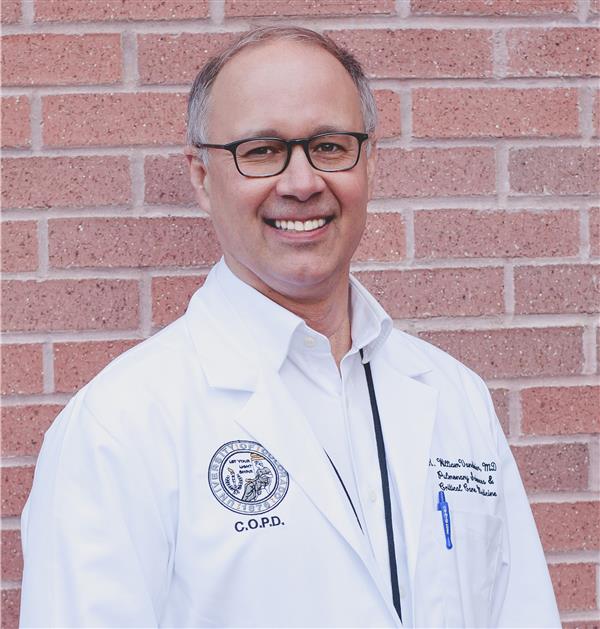
William Vandivier, MD
Principal Investigator